turismoa@zumaia.eus
 Bulegoa





The Octopus and Zumaia: Mutual Assistance


In the past, when Zumaia often went through times of famine, the octopus was one of the most important resources to ensure there was food on the table at most of the homes in town
We have the largest tidal flat in the Cantabrian Sea, where octopus, crabs, sea urchins, and limpets are traditionally caught. Zumaia has a perfect habitat for the octopus and other creatures prized by the townspeople, which is why a close relationship has been forged between them.
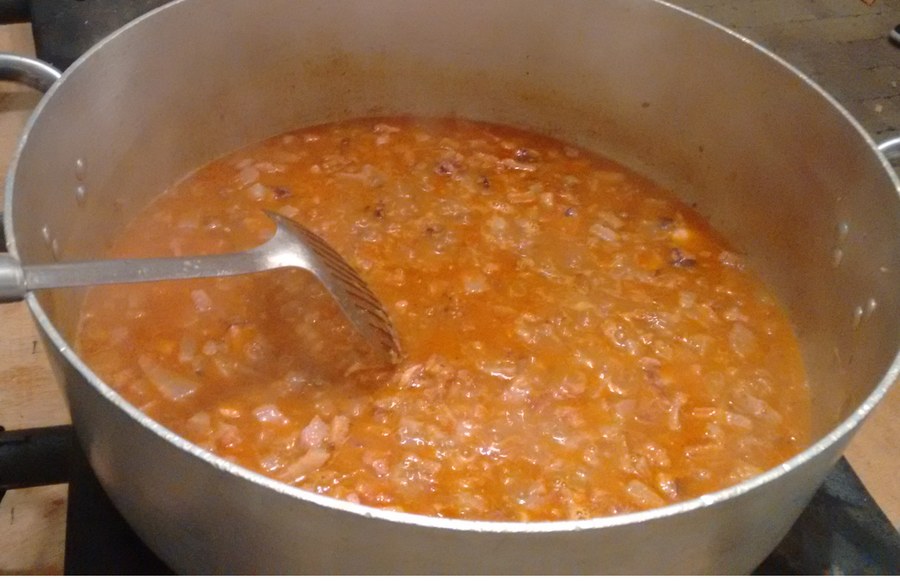
There are several examples of that special relationship. One of them is that in Zumaia we prepare a dish with octopus that is not cooked anywhere else: octopus soup. To prepare it, the octopus must first be dried very well, this being one of the oldest fish and cephalopod conservation systems. Stripped of the water in their tissues and cells, these animals do not rot, and can be consumed much later.
Today it is not very common to eat this soup, but it is still offered by a few bars and restaurants in the town. In Zumaia, however, there are two times a year when one has a chance to eat this dish in abundance: at the festivities of San Telmo, and at the Olagarro Eguna; this last festival was celebrated for the first time in 2004, and since then it has a specific date on the calendar: the third Saturday in September. Since last year, however, it has been impossible to enjoy octopus soup, "because there isn't enough octopus on our coast to be able to dry it later."
This has raised a concern around this issue: is it sustainable to promote the consumption of octopus when it is disappearing on our shores? Gonzalo Torre, environmental coordinator of the Geopark, explains that the lack of octopus is widespread: "It is occurring in several places, including Galicia, where, for example, the Spanish National Research Council (CSIC) has declared that octopus lacks cortisol and corticosterone, which prevents it from being able to adapt to an excess of fresh water. In our area, at least to my knowledge, no research has been conducted, and it is difficult to know the reason why it has decreased, so the measures to be taken cannot be determined."
Since the coast of Zumaia is part of a Natural Landscape (formerly a Biotope), octopus fishing is also regulated. Thus, in two specific areas fishing it is prohibited, while in the rest of the areas only octopuses weighing more than 750 grams, and only one per day per person, can be caught. "Our territory is taken care of, it is regulated. But we can't know the effects, because we don't have the data."
This year's Olagarro Eguna will be held on September 20. Octopus skewers, octopus paella and octopus with potatoes can be savored at the festival, celebrating octopus, gastronomy, and the marine world. The octopus has saved Zumaia in difficult times, and now the time has come for Zumaia to protect the octopus, so we may have to give the party a twist.