turismoa@zumaia.eus
 Bulegoa





From the Cliffs to the Marsh: Zumaia's Protected Natural Areas


Although Zumaia is known for its stunning cliffs, its greatest wealth lies in its protected natural areas.
The municipality boasts several sites of great ecological and geological value, forming part of the Basque Country's most outstanding natural heritage. Here, visitors can trace millions of years of Earth's history, all while taking in an extraordinary diversity of flora and fauna.
The best known site is the Deba-Zumaia Protected Natural Landscape, a roughly eight-kilometer stretch of coastline that has earned international renown for its flysch, a dramatic sequence of rock strata preserving a geological record spanning the last 60 million years. Within these layers, visitors can observe landmark scientific features, such as the boundary between the Cretaceous and Tertiary periods. Its cliffs, broad intertidal platforms, and the constant action of the sea have generated a unique landscape that draws researchers and visitors alike from around the world. Also worth noting is the area's exceptional biodiversity, the primary reason for its protected status.
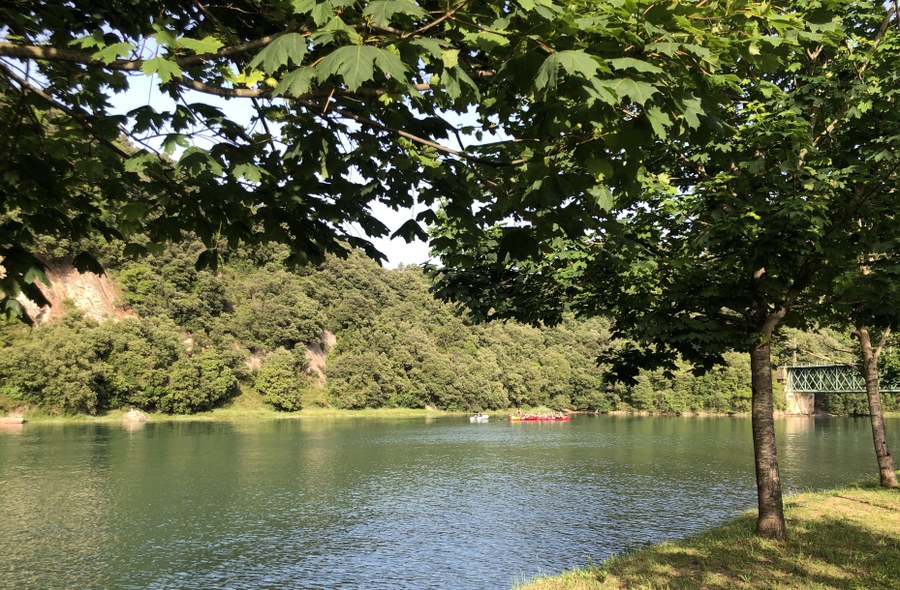
Zumaia's natural heritage extends, however, far beyond its coastline. The Urola River estuary is listed as a Special Area of Conservation under the Natura 2000 network, and its salt marsh, reed beds, and tide-shaped habitats make up an essential refuge for numerous migratory birds, which feed and rest in them throughout the year. This is an ecosystem of enormous biological richness and great importance for environmental balance.
Also notable within the estuary are the Bedua meander and islands, where the interplay between the waters of the Urola River and the tides has given rise to a well-preserved marshland environment home to numerous species of plants and birds. Despite its small size, it is one of the best places to gain a first-hand understanding of how these ecosystems function.
Another area of special interest is the dunes and wetlands of Santiago Beach, whose ecosystems play an essential role in protecting the coastline and harbour species adapted to very particular conditions, their conservation made possible through management that seeks to balance protecting the natural environment with its responsible enjoyment.
All of these areas are also part of the Basque Coast UNESCO Global Geopark, a region encompassing geology, nature, and culture, all with a twofold aim: to preserve this exceptional heritage and expose the public to it in a sustainable way.
In addition, anyone wishing to learn more about Zumaia's natural and geological wealth will soon be able to do so at the Flyschenea Museum, a new space that will offer an engaging and accessible way to discover the secrets of the flysch and the municipality's various protected areas.
Zumaia is, in short, an ideal destination both for nature lovers and for those who want to delve into our planet’s fascinating geological history. Come and enjoy nature!